
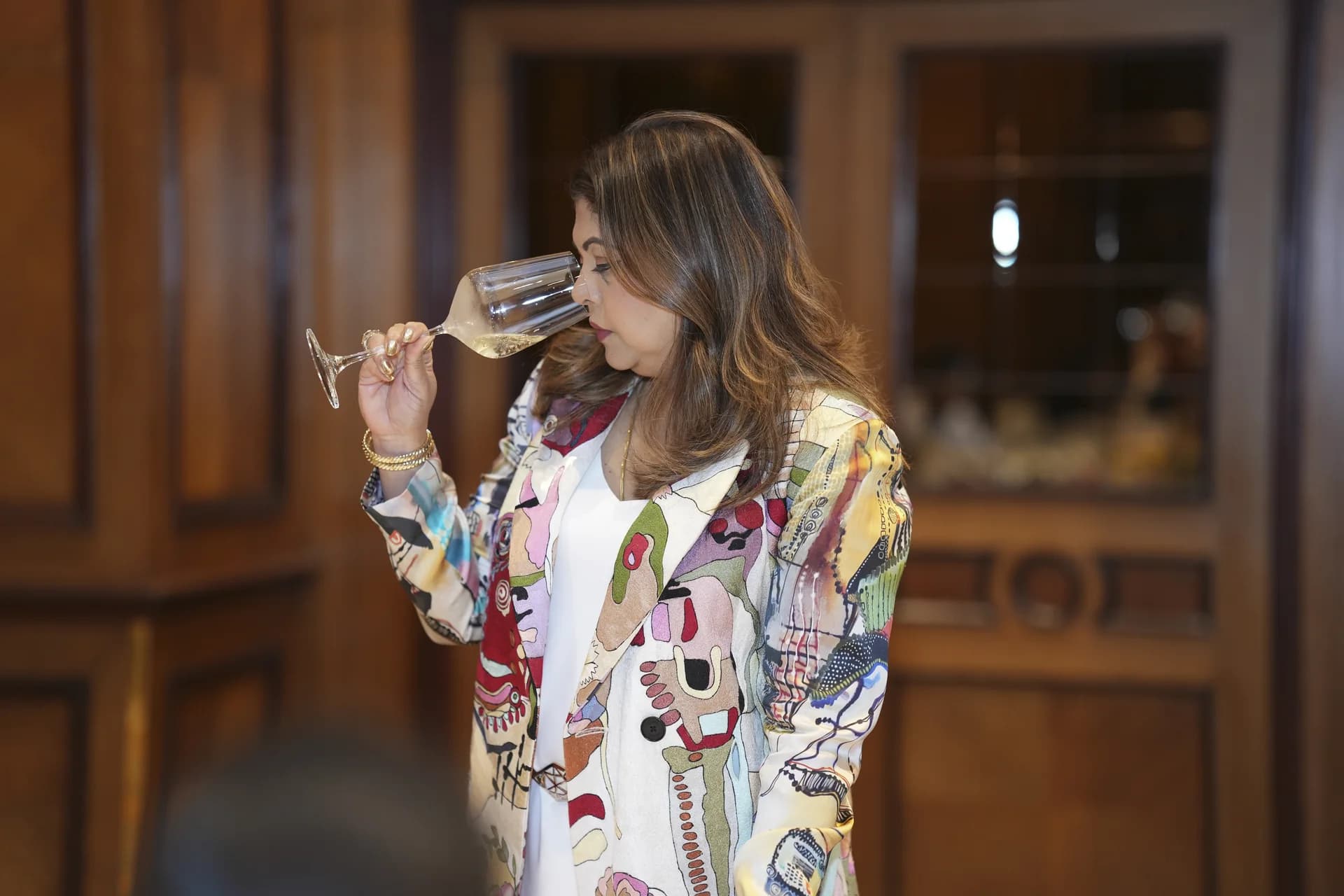
If you think every sparkling wine is Champagne, you're missing out on a whole world of bubbles.
Sometimes, a crisp glass of sparkling wine is just what you need: to brighten an ordinary evening, catch up with friends or celebrate something special. But not every occasion calls for Champagne. And why should it, when there's so much else to explore?
We've picked 11 bottles from the 2026 India Wine & Spirit Ratings by Sonal C Holland (IWS Ratings). All were assessed by Sonal C Holland MW- India’s only Master of Wine and most qualified beverage expert- on the 100-point scale. Here's what makes each style worth trying.
Champagne: Not Just for Milestone Moments
Champagne is a sparkling wine that comes exclusively from the Champagne region of France. What makes it special is how it gets its bubbles. First, grapes are fermented to make a still wine, just like any regular wine. Then, yeast and sugar are added, and the wine undergoes a second fermentation inside a sealed bottle. This produces carbon dioxide, which gets trapped in the wine and creates its bubbles.
But there's another benefit. The wine is left ageing in the bottle in contact with the spent yeast, which gradually adds complexity and flavours of freshly baked bread, biscuits and toast. This traditional method gives Champagne its characteristic combination of freshness, fine bubbles and rich, layered flavours.
If you have never tried Champagne, Laurent Perrier La Cuvee Brut NV (95 points, Icon) is a great starting point. It’s elegant, nuanced and timeless.
Want something more mature? CARBON BUGATTI EB-01 BRUT - MILLESIME 2002 (87 points, Recommended) is toasty, complex and luxurious. Meanwhile, CARBON BUGATTI EB-02 BRUT- MILLESIME 2006 (85 points, Recommended) is mature, toasty and celebratory.
Prosecco: Fresh, Fruity and Made for Sharing
Prosecco comes from north-eastern Italy and is made mainly from the Glera grape. Unlike Champagne, most Prosecco develops its bubbles in pressurised tanks. This helps preserve its bright, fruity personality.
If you want to gift a Prosecco wine to someone, Villa Sandi Asolo Prosecco Superiore Brut DOCG NV (95 points, Icon) is a lovely option, due to its refined, delicate and celebratory persona. It also carries the Exceptional Value seal, recognising quality beyond expectations for its price.
Another option worth exploring is Borgoluce, Lampo Prosecco Brut NV (93 points, Outstanding) is fresh, lively and celebratory, and holds a Best Value Buy seal.
For casual evenings, consider PERLINO Prosecco DOC BRUT WINE NV (89 points, Recommended), fresh, delicate and festive. BOTTEGA GOLD Prosecco SPUMANTE DOC NV (87 points, Recommended) is green-apple-led, lively and dazzling, while Le Contesse Prosecco DOC NV (86 points, Recommended) is crisp and party-ready.
What's DOCG? It's an Italian designation with additional production rules beyond DOC. It's useful information, but neither designation tells you which bottle you'll prefer.
Other Sparkling Wines Worth Exploring
Fancy something different? Familie Fabre, Instant Bulle Pét Nat 2025 (92 points, Outstanding) from France is pear-scented, delicate and playful.
Pét-nat, short for pétillant naturel, gets its bubbles when the wine's first fermentation finishes inside the sealed bottle. It can feel different from conventional sparkling wine.
If you like Australian wines, then you must try HARDYS Stamp Brut Sparkling 2023 (88 points, Recommended, Best Value Buy), with a peachy, delicate and lively taste.
Brut, Extra Brut or Extra Dry?
Sparkling wine sweetness labels aren't always intuitive. Brut means dry. Extra Brut and Brut Nature are drier still. Surprisingly, Extra Dry is slightly sweeter than Brut.
If you enjoy a crisp glass, Brut is an easy starting point. But remember, bright acidity can make even a slightly sweeter wine taste refreshing.
How to Enjoy Sparkling Wine
- Serve it chilled, not frozen. Around 6–8°C suits fresh Prosecco, while richer Champagne can show more aroma at roughly 8–10°C. Too much chill hides its flavour.
- Choose your glass. A flute keeps bubbles looking lively. For complex Champagne, try a regular white wine glass as it gives aromas more room to express themselves.
- Open gently. Keep a hand over the cork, angle the bottle away from people and twist the bottle slowly. Aim for a quiet release, not a showoff that could result in an accident.
- Pour slowly. Tilt the glass slightly and fill it in stages to keep the foam under control.
Explore more expert-rated sparkling wines on IWS Ratings.